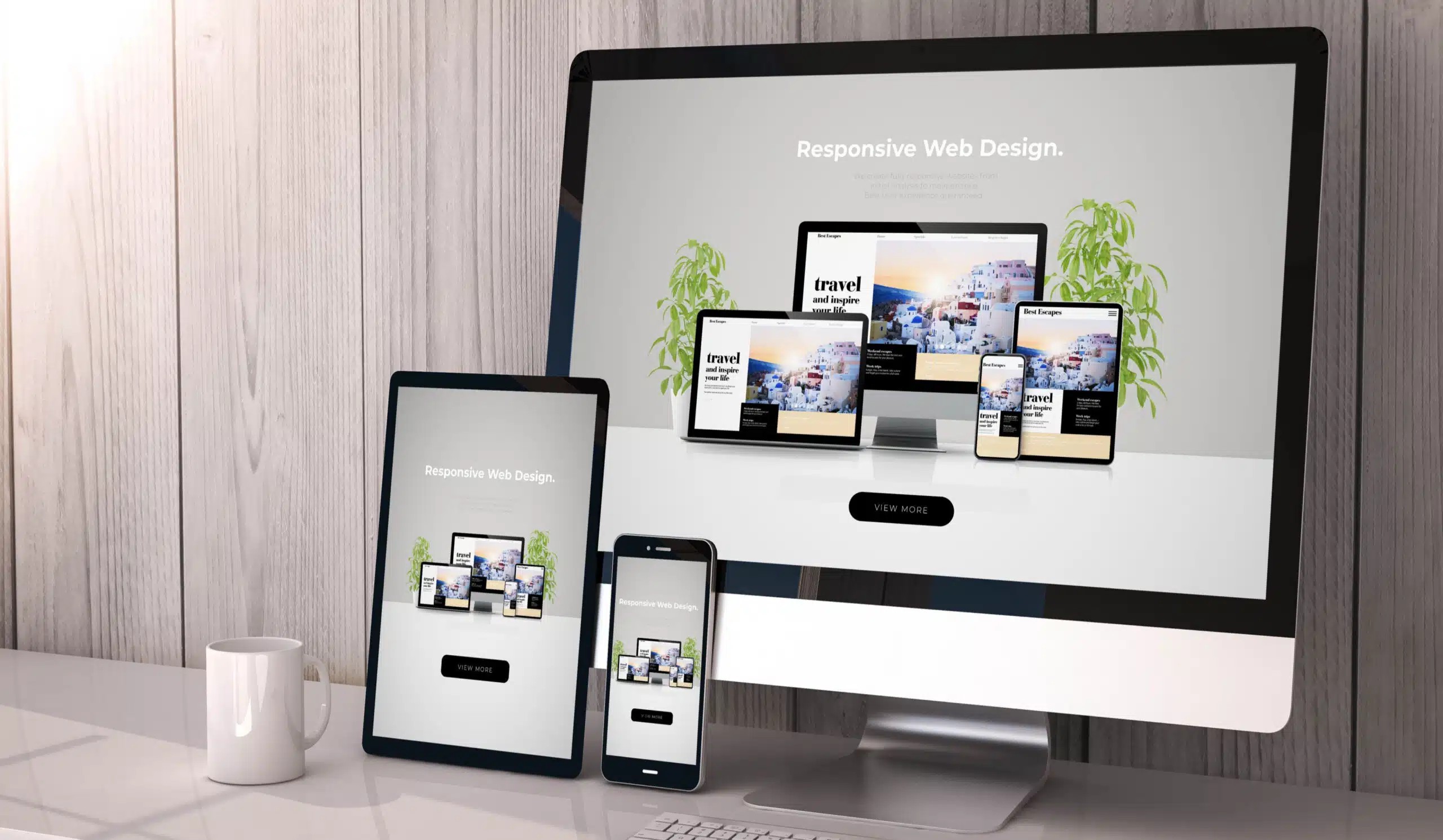
In today’s tech-driven world, web design plays a major role in user experience. Responsive web design is the approach to web design that enables web pages to adapt automatically and adjust its layout according to the size of the device being used. This ensures an optimal viewing experience for users regardless of what device they are using. By utilizing responsive web design, businesses can ensure their website is accessible on any device and improve user engagement.
Here are 10 ways businesses can use responsive web design to enhance their user experience.
1. Utilize Media Queries to Create Flexible Layouts
Creating a website with a flexible design that works on any device is now easier than ever thanks to modern front-end development focusing on media queries. Media queries enable developers to create code tailored specifically for different devices and browsers. Using the dimensions of those devices, developers can take advantage of the power of responsive web design by writing custom rules that ensure their websites look beautiful across any platform.
Furthermore, you can use media queries to easily create layouts based around device size and orientation, meaning every user experiences your site in an optimized and consistent format regardless of device type. Whether on mobile phones or tablet screens, utilizing media queries enables developers to craft beautiful and performance experiences that target nearly any screen imaginable while still providing the same great content.
2. Simplify Navigation for Mobile Devices
Making websites easy to navigate for mobile devices is essential in today’s digital world. While many people use their phone as their primary computing device, the small screens and lack of cursor control can make navigating more difficult. As a result, it is critical that navigation on mobile devices is simple and straightforward.
Designers need to think flexibly when structuring menus and finding smart ways to display information. Being aware of screen size restrictions and utilizing organization tools are also key to ensuring that navigation is smooth. Ultimately, streamlining navigation for mobile devices means less frustration for users and ultimately leads to happier customers.
3. Use Responsive Images and Videos
In the digital age, having responsive images and videos on your website is essential for a successful online presence. Responsive images and videos scale automatically to fit any device – desktop, laptop, tablet or mobile – without creating resolution problems or adversely affecting loading speed.
This in turn helps you keep users engaged by ensuring they have a seamless experience that encourages them to explore more of your content. Not only that, but using responsive images and videos also lends itself to improved SEO rankings since search engine bots are able to index through your pages faster and more easily. Put simply, adding responsive images and videos not only enhances usability but can also help boost the performance of your website.
Learn more: How to Optimize Images and Videos for Maximum Impact
4. Optimize Text Content for Different Screen Sizes
Creating content for the web can be a tricky balance between accessibility and aesthetics. Optimizing text content for different screen sizes has become increasingly important in today’s digital age where mobile users make up a large percentage of website visitors. It is essential for content creators, such as bloggers and marketers, to take into account responsive design when crafting their content if they want it to be readable on all types of devices.
Today, there are numerous tools available to help authors automatically optimize text for different screen sizes. When used correctly, these tools can help customize the user experience based on the device from which your content is being accessed, offering users a more enjoyable experience and giving you a competitive edge in your industry.
5. Allow Users to Customize Their Experience on Your Site
Giving visitors to your site a customizable experience is an exciting way to create user engagement. Allowing users to tailor their web experience means providing various ways for them to access your content in the way that works best for them. From connecting their social accounts for easier sharing, to selecting their preferred topics and content category views, customized website navigation offers great convenience that translates into a better overall user experience. If you’re looking for ways to drive more user satisfaction – and engagement – while helping your visitors find relevant content quickly and easily, then letting them personalize their own journey on your website is definitely worth exploring.
6. Make Sure Your Website Loads Quickly on All Devices
Having a website that loads quickly is crucial for user engagement. People expect websites to load quickly, regardless of the device they are using. If your website doesn’t load in under three seconds, it can significantly reduce your potential customers. To ensure your website loads quickly on all devices, frequently measure the page delivery performance and speed up any slow pages.
Make sure you optimize images and use a content delivery network (CDN), as this will help keep your web pages loading fast on all platforms. In addition, you may want to simplify your page structure and design so visitors don’t have to wait to view relevant content. With these steps taken, you can guarantee that whatever device visitors choose to access your website with, they will be able to do so without any delays.
7. Include Finger-Friendly Buttons and Links
It’s important to include finger-friendly buttons and links on websites or applications designed for mobile use. These need to be placed in strategic locations and should have a minimal size of at least 44px for easy tappable actions. The shape, size, spacing and design should all be taken into account when creating them as well to ensure that users can identify the action quickly. Each button or link should also have a clear label that accurately describes the intended action. Incorporating these details will encourage user engagement and maintain a high level of usability in mobile experiences.
8. Test Across Multiple Platforms & Browsers
Testing applications across multiple platforms and browsers is essential for making sure that your product works correctly. By performing compatibility testing against different hardware, operating systems, and configurations you can ensure that the customer experience is consistent and smooth regardless of what device or browser your users are accessing your product from. This helps to maximize user satisfaction by making sure that key functionality works as expected regardless of the environment, which ultimately leads to increased customer loyalty.
9. Optimize Forms for Mobile Usage
As the use of mobile devices continues to increase, creating forms that are optimized for both desktop and mobile use is becoming an essential part of any successful website. Mobile-friendly forms can help boost conversion rates by providing users with a smoother and more efficient experience, ensuring that your business’s website does not suffer from lost revenue opportunities.
By designing forms that are compatible with all devices, including small screens and touchscreens, you can make sure customers have a consistent experience no matter what device they are using. For optimal results, make sure fields are clearly marked, labels are concise and located close to their associated fields, and consider adding autocomplete capabilities when appropriate. Investing the time to make forms mobile-friendly will ultimately improve customer satisfaction, lead to more conversions and increase overall usability on your site.
10. Leverage Accelerated Mobile Pages (AMP) Technology
Leveraging AMP Technology can give your digital content a significant advantage with increased reliability and faster loading times. With its open framework, AMP is designed to improve the performance of web content, provide a better user experience across different devices, and optimize appearance when shared on social media. It has been proven to increase page ranking and views, generating faster page load speeds while reducing data usage — making high quality web pages easy to access even on mobile devices with limited bandwidth. Whether you are creating a website, blog post, or landing page, utilizing an AMP-supported platform can result in higher engagement with your content and helps ensure it loads quickly for all of your viewers.
Conclusion
By leveraging web design and user experience best practices, you can ensure that your website is optimized for all devices. From utilizing responsive web design to optimizing forms and leveraging AMP technology, there are many strategies available to help improve usability on mobile devices while also ensuring content loads quickly and reliably. All of these approaches will ultimately lead to increased customer satisfaction when accessing your site from any device or browser. Taking the time to make sure web pages load correctly across different platforms will result in a better overall user experience, which leads not only to more conversions but also higher loyalty among customers.